Choosing the Right Welding Process for Your Custom Metal Assemblies
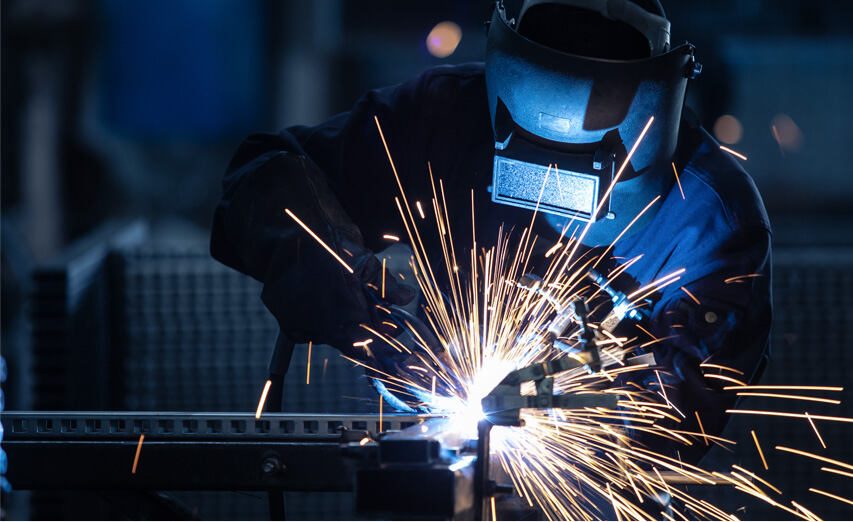
When it comes to manufacturing metal components, choosing the right welding process can make a significant difference in the quality, efficiency, and overall performance of the finished product.
From simple metal connections to complex multi-part assemblies, different welding techniques offer unique advantages depending on the materials, design requirements, and production demands.
At AWC Industries, we provide a comprehensive range of welded assembly solutions, including MIG welding, TIG welding, resistance welding, and robotic welding. By combining advanced technology with extensive manufacturing experience, we help businesses produce reliable, high-quality metal assemblies that meet their specific production needs.
Understanding the Role of Welding in Metal Fabrication
Welding is an essential manufacturing process that permanently joins metal components to create durable, functional assemblies.
However, not all welding methods are interchangeable. The ideal process depends on several factors, including material thickness, joint configuration, production volume, and the intended application of the finished product.
Selecting an appropriate welding method can help manufacturers:
- Improve production efficiency and consistency.
- Maintain accurate and dependable weld quality.
- Reduce unnecessary manufacturing steps.
- Accommodate complex assembly designs.
- Support cost-effective production at different volumes.
Understanding the strengths of each welding process is an important part of developing a successful manufacturing strategy.
MIG Welding: Efficiency and Versatility
Metal Inert Gas (MIG) welding, also known as Gas Metal Arc Welding (GMAW), is widely used in manufacturing because of its versatility and production efficiency.
This process uses a continuously fed wire electrode and shielding gas to create a strong welded connection between metal components.
MIG welding is commonly used for applications requiring efficient production and consistent weld quality, particularly when manufacturing larger quantities of metal assemblies.
Key advantages of MIG welding include:
- Efficient welding speeds.
- Compatibility with a variety of metal thicknesses.
- Suitability for automated welding applications.
- Consistent results when properly configured.
- Versatility across numerous industrial applications.
For manufacturers balancing production speed with quality requirements, MIG welding can provide an effective solution.
TIG Welding: Precision and Control
Tungsten Inert Gas (TIG) welding, also known as Gas Tungsten Arc Welding (GTAW), is frequently selected for applications where precision, weld control, and appearance are especially important.
Unlike MIG welding, TIG welding uses a nonconsumable tungsten electrode to produce the weld. Filler material may be added separately depending on the application.
This process offers excellent control over heat input and weld placement, making it useful for intricate assemblies and applications requiring careful attention to detail.
Key advantages of TIG welding include:
- Precise control over the welding process.
- High-quality, clean welds.
- Suitability for certain thin materials and detailed components.
- Excellent control for specialized joint configurations.
Although TIG welding can require more time than other methods, its precision makes it valuable for projects with demanding weld requirements.
Resistance Welding: Efficient Joining for Production Assemblies
Resistance welding uses electrical resistance and pressure to generate heat and join metal components.
Unlike traditional arc welding methods, resistance welding generally does not require separate filler material, making it especially useful for certain repetitive manufacturing applications.
At AWC Industries, our resistance welding capabilities include:
- Spot Welding: Joining overlapping metal components at specific contact points.
- Grid Welding: Creating welded intersections in wire and grid structures.
- Butt Welding: Joining components at their ends or edges.
- T Welding: Producing connections in T-shaped configurations.
- Stud Welding: Attaching studs or similar fasteners to metal surfaces.
These processes can be particularly beneficial when manufacturing components that require repeatable weld locations and efficient production cycles.
Robotic Welding for Complex Assemblies
As manufacturing requirements become more demanding, automation plays an increasingly important role in maintaining production consistency.
AWC Industries utilizes MOTOMAN 6-axis welding robots equipped with advanced controls to manufacture complex welded assemblies with repeatable accuracy.
Robotic welding systems are especially valuable for applications involving multiple weld locations, intricate component geometries, or recurring production requirements.
By programming consistent welding paths and parameters, robotic systems can help minimize variations between assemblies while supporting efficient production.
AWC Industries also designs and builds sophisticated welding fixtures in-house, helping ensure components are accurately positioned throughout the welding process.
Together, automated welding technology and custom fixturing support consistent manufacturing results.
Matching the Welding Process to Your Manufacturing Needs
Choosing a welding process involves more than identifying which technique can join two pieces of metal.
Manufacturers must also consider the complete production process, including material characteristics, assembly complexity, required tolerances, and anticipated production quantities.
For example, a high-volume metal assembly may benefit from the speed and repeatability of automated MIG or resistance welding. A detailed component with more demanding weld-control requirements may be better suited for TIG welding.
The appropriate solution ultimately depends on the specific requirements of the finished assembly.
At AWC Industries, our range of welding capabilities allows us to support diverse manufacturing applications involving sheet, plate, strip, wire, rod, and bar materials.
Partner With AWC Industries for Custom Welded Assemblies
Reliable welded assemblies begin with the right combination of equipment, processes, and manufacturing experience.
At AWC Industries, we combine MIG, TIG, resistance, and robotic welding capabilities with custom-built fixtures to produce high-quality weldments and complex metal assemblies.
Our focus on dependable quality, efficient production, and responsive service helps customers meet manufacturing requirements and keep their projects moving forward.
Looking for a manufacturing partner for your next welded assembly project? Contact AWC Industries today to learn more about our welding capabilities and how we can support your production needs.
